For me, R&D wasn’t a department; it was a war against the status quo. I didn’t want to just manufacture products; I wanted to own the “soul” of the technology. This is the story of how I built a sanctuary for innovation in an environment that was terrified of change. Central to this journey was the concept of the Research and Development Inverter, which plays a vital role in transforming industries. This effort culminated in the establishment of the First R&D setup in India, marking the beginning of a new era in technological advancement in the country.
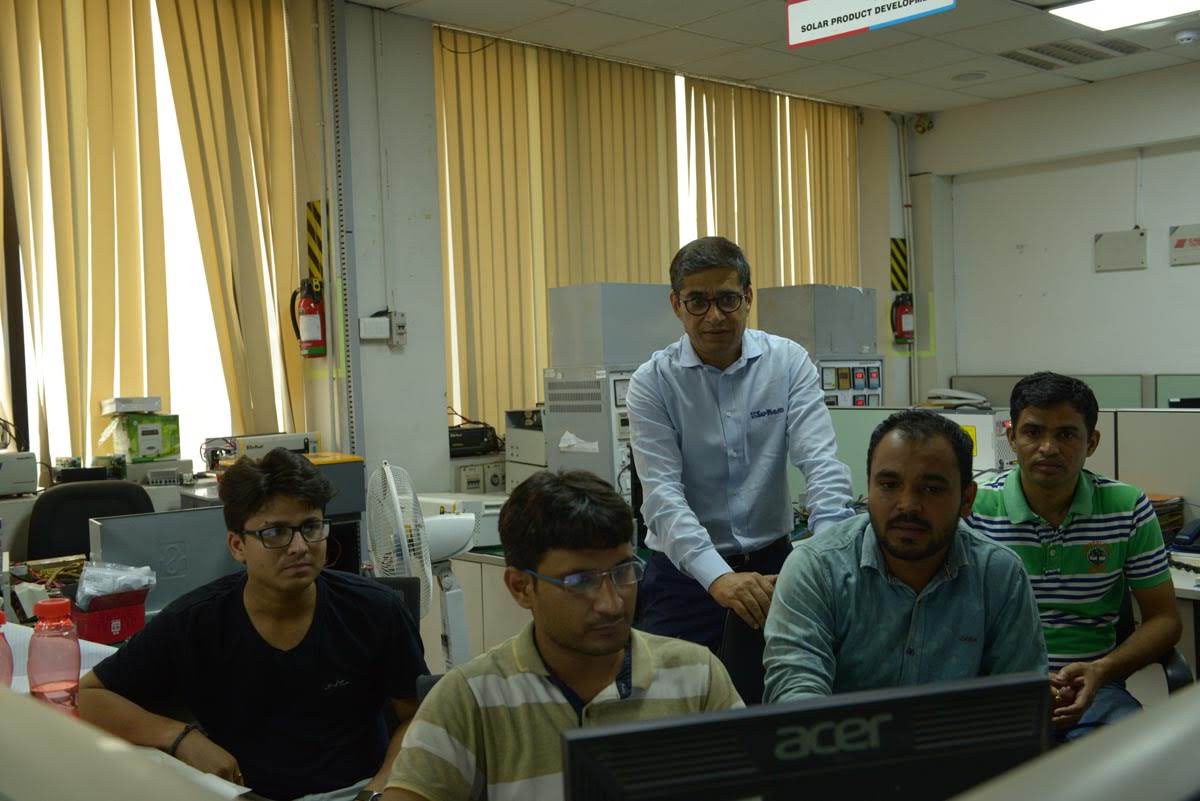
The First R&D Setup in India: A Game Changer in Innovation
The First R&D setup in India is not just a milestone for our company but for the entire industry, as it sets a standard for future innovations.
With the establishment of the First R&D setup in India, we are paving the way for future breakthroughs that will redefine the market.
The First R&D setup in India serves as a foundation for our ongoing innovations and commitment to excellence.
The innovations stemming from the First R&D setup in India have disrupted the market and changed the landscape of technology.
The Role of Research and Development centre in Innovation
Thanks to the First R&D setup in India, we were able to embrace new technologies that enhanced our product offerings significantly.
Understanding the significance of the Research and Development Inverter has been crucial for our growth and development as a leading company.
The Research and Development Inverter paved the way for groundbreaking innovations that disrupted the market.
The First R&D setup in India is a testament to our dedication to leading the industry through innovation.
With the Research and Development Inverter, we were able to integrate advanced technologies that enhanced our product offerings.
In 1998, I opened up my own malfunctioning inverter and was disgusted. It was a primitive mess of outdated transistors and cheap, single-sided PCBs. I realized then that the Indian market was being treated like a dumping ground for old tech.
I decided Su-kam would be different. I didn’t just want to fix inverters; I wanted to reinvent them using MOSFET technology and Digital Compression. But to do that, I needed more than just a factory—I needed a temple of science.
The Research and Development Inverter is not just a product; it symbolizes a paradigm shift in how we approach technology and innovation.
Our mission to innovate through the First R&D setup in India has become a cornerstone of our corporate strategy.
The ₹20 Lakh Gamble: Tools Before Comfort
You cannot build the future with second-hand tools. In the early days, I made a choice that everyone called “madness.” I spent ₹20 lakhs—money that could have bought me a luxury house—on an Anritsu Spectrum Analyzer and advanced testing equipment.
The success we have achieved is a reflection of the opportunities created by the First R&D setup in India.
Every achievement in our innovative journey can be traced back to the establishment of the First R&D setup in India.
I knew that without the right “eyes” to see the electricity, my engineers would be flying blind. I chose the machine over the roof because I knew that if the R&D was strong, the empire would follow.
Through the lens of the Research and Development Inverter, we have explored uncharted territories in technology.
The Battle for Recognition: No Contacts, Just Science
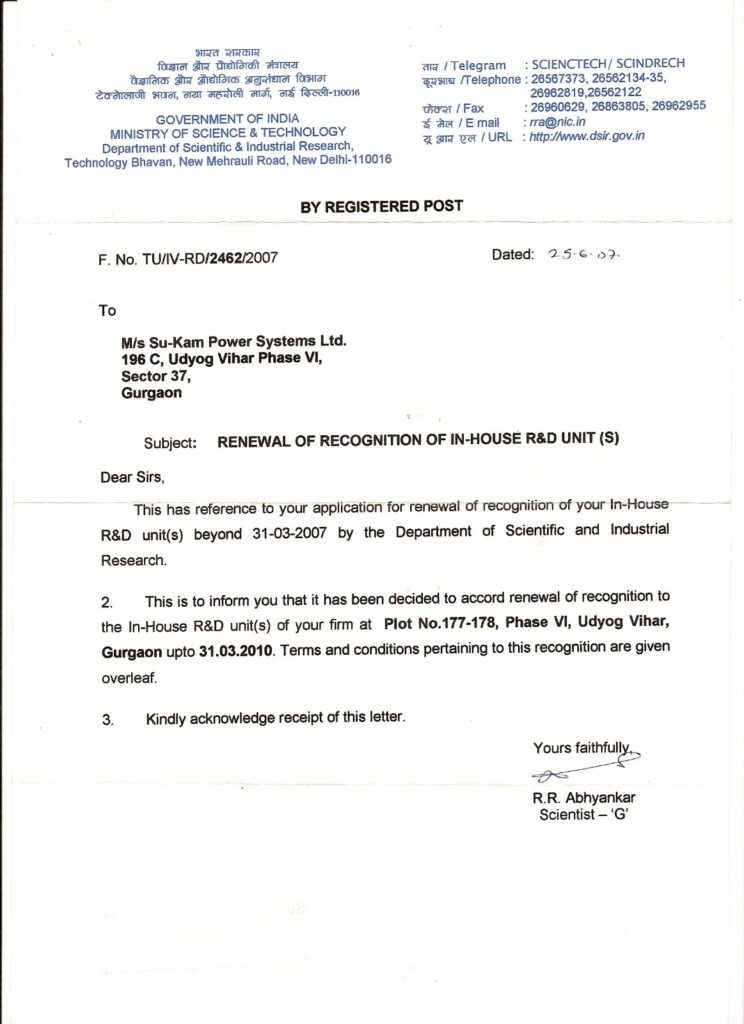
I set out to do what no one in the Indian power storage or solar industry had done: get formal recognition from the Department of Science and Technology (DST).
In those days, the government only spoke to massive conglomerates or state labs. I was an underdog with no “godfather” in the ministry and zero political “contacts.” My file was at the bottom of a very dusty stack.
The recognition of our R&D efforts is a direct outcome of the initiatives launched from the First R&D setup in India.
But I didn’t win through “liaison.” I won through sheer technical superiority. When the government inspectors finally arrived, I didn’t let a manager speak. I walked them through the circuits myself. I showed them the Anritsu machines and the data from our “failed” experiments. They were stunned to see a private entrepreneur who prioritised science over margins.
Embracing the philosophy of the Research and Development Inverter has inspired a culture of innovation within our team.
The success of the Research and Development Inverter is a testament to our commitment to excellence in engineering and innovation.
The Result: We became the first company in the power storage and solar industry to be officially recognized by the Government of India for our R&D.
The innovations driven by the First R&D setup in India have greatly benefited our customers and the industry at large.
The Human Wall: Fighting the Culture of Fear
Our commitment to innovation through the First R&D setup in India has enabled us to turn challenges into opportunities for growth.
The hardest part of R&D wasn’t the science—it was the Indian engineering mindset.
The journey of the First R&D setup in India has redefined our approach to solving complex challenges in the industry.
- The Fear of Failure: My engineers were terrified of blowing up a MOSFET. I had to teach them that “failure” was just a data point. I told them, “If you aren’t breaking things, you aren’t innovating.”
- The Knowledge Hoarders: I saw senior engineers hiding their “secrets” to keep their job security. I fought to break these silos, trying to instil a sense of collective ownership.
- The “Job Security” Trap: I watched brilliant minds lose their curiosity once they felt “safe.” I remember one engineer who refused to move past outdated Assembly language, becoming a bottleneck because he was too scared to learn the new world. https://www1.eere.energy.gov/solar/pdfs/4_bower.pdf
My Innovation Philosophy: Technology with Empathy
With the establishment of the First R&D setup in India, we have cultivated a culture where innovation thrives.
One of our greatest R&D wins came from listening to a single frustrated customer. They were tired of their inverter shutting down the moment they turned on an extra light.
Our customers have greatly benefited from the innovations driven by the Research and Development Inverter.
The evolution of our products is closely tied to the advancements made possible by the Research and Development Inverter.
Instead of blaming the user for an “overload,” I pushed my team to find a solution. We developed a multi-stage overload protection system. It gave the user a warning and a “grace period.” We turned a technical limitation into a human convenience.
My Hardest Truth
The Research and Development Inverter has redefined our approach to solving complex challenges in the industry
My journey in R&D taught me that technology is easy, but people are complex. I successfully built the first-of-its-kind lab and got the highest government seals, but my constant struggle was making my team feel the same “creator’s pride” that I felt.
I realised that to lead in solar and power, you don’t just need better batteries; you need fearless dreamers. I didn’t just want to build an R&D centre; I wanted to build a culture where an Indian engineer’s greatest fear wasn’t “making a mistake,” but “staying the same.”