An open letter to BEE: why are India’s inverter efficiency standards still not mandatory?
Ten years ago we built India’s first 4-star inverter and proved it could be done. A decade on, home inverters and the batteries that feed them still carry no mandatory efficiency standard — while every air conditioner, refrigerator and ceiling fan in the country does. I want to ask the Bureau of Energy Efficiency a simple question: why?
I am writing this not as a complaint, but as a citizen and an engineer who spent his life in this industry. We solved this problem years ago. The country simply never made the solution the rule.
1 We proved it in 2016 — a 4-star inverter, designed in India
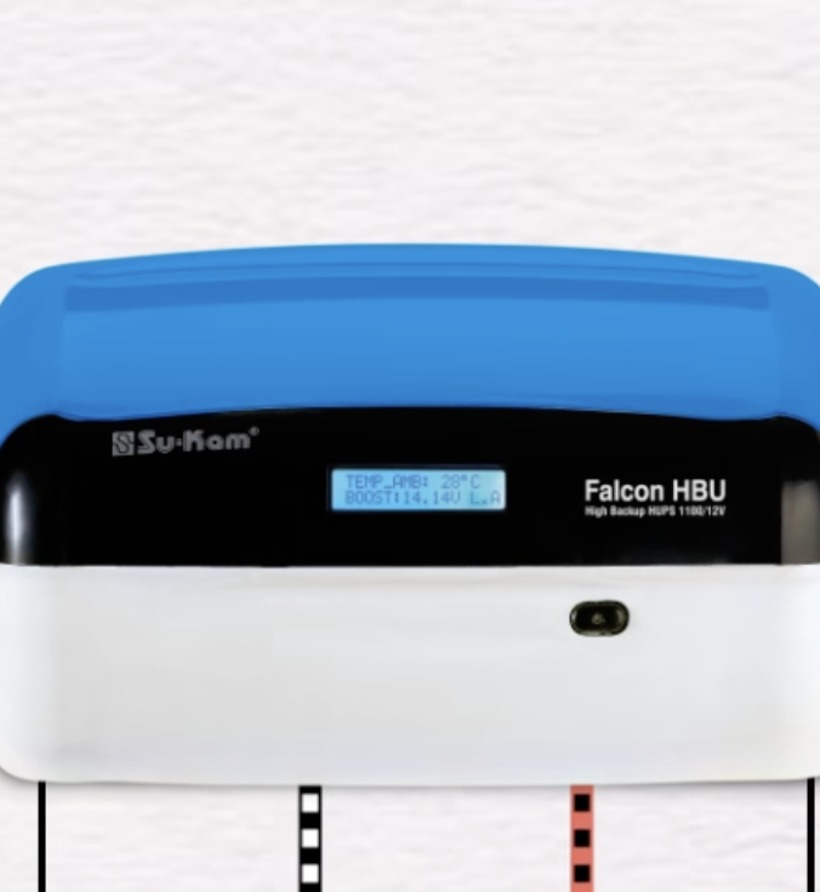
Back in 2016, Su-Kam built the Falcon HBU — India’s first home UPS to earn a 4-star rating from the Bureau of Energy Efficiency, running at around 90% efficiency. It was a high-frequency inverter, designed and engineered here in India, by the same R&D team that gave the country its first high-frequency inverter and its 3-phase technology. It was living proof that an efficient, affordable home inverter was not a dream — it was a product you could buy.
That was ten years ago. A decade is a long time. And yet, if you walk into a shop today and ask for a star-rated home inverter, you will struggle to find one — because the rating was never made compulsory.
2 Most Indian inverters are still energy guzzlers
Here is the uncomfortable truth. A very large share of the home inverters sold in India today are inefficient by design. They are built on old, cheap, transformer-based topologies that bleed energy as heat — especially at the partial loads at which Indian homes actually run them. Independent analysis shows conventional inverters can waste 12–20% of the energy at part load, and that is before you even count the battery.
Multiply that waste across the tens of millions of inverters humming in Indian homes, shops and clinics, and you are looking at a staggering, invisible drain on the national grid — electricity we generate, pay for, and then simply throw away as heat.
3 Every appliance has a standard. The inverter doesn’t.
This is the contradiction that I cannot accept. The BEE Standards & Labelling programme has worked brilliantly where it has been applied. Star ratings are mandatory for room air conditioners, refrigerators, ceiling fans, televisions, water heaters, washing machines and more — the first set of appliances was made compulsory years ago, and the efficiency of those products has climbed dramatically as a result.
The home inverter — one of the most power-hungry boxes in an Indian house — is not on that mandatory list. The recent BEE move on inverters (voluntary from 2024, mandatory from 2026) applies only to grid-connected solar inverters, as the notification itself makes clear. The ordinary home backup inverter and the battery behind it are left out entirely.
4 And the battery has no standard at all
It gets worse when you look at the lead-acid battery. There is no BEE efficiency standard for it — none. Yet a lead-acid battery has a round-trip efficiency of only about 70–85%, which means every 100 units you store can cost you 115 to 143 units from the grid. The inverter and the battery are sold as a pair and used as a pair; rating one and ignoring the other is half a policy. A mandatory standard on batteries is, to my mind, an absolute must if we are serious about saving electricity.
5 So why hasn’t it happened? My honest view
I will say plainly what I believe, and I accept it is my opinion. I think the standard has not been made mandatory because of pressure from manufacturers who would have to retool their factories and abandon cheap, inefficient designs to meet it. An efficiency standard is wonderful for the consumer and for the country, but it is uncomfortable for any maker who has built a business on the old, lossy technology. Where consumer interest and manufacturer convenience collide, convenience has so far won.
6 The cost of waiting: we are losing the lead we built
There is a second cost, and it is national. India once led this category. Su-Kam alone exported power-backup products to more than 70 countries. Today the picture has flipped: India has become one of the world’s largest importers of power inverters, buying heavily from China, while China now controls 75–95% of the global solar and power-electronics supply chain. The markets I helped build for Indian inverters have dwindled, and the dominance we once enjoyed has quietly moved across the border.
A tough domestic efficiency standard does not just save electricity — it forces our industry to innovate, to move up the technology curve, and to build products the world wants to buy again. Without it, we compete on price alone, and on price we will keep losing to China. I keep asking: who in India is still focused on the technology and on the export front? Far too few.
7 How much power could a standard actually save?
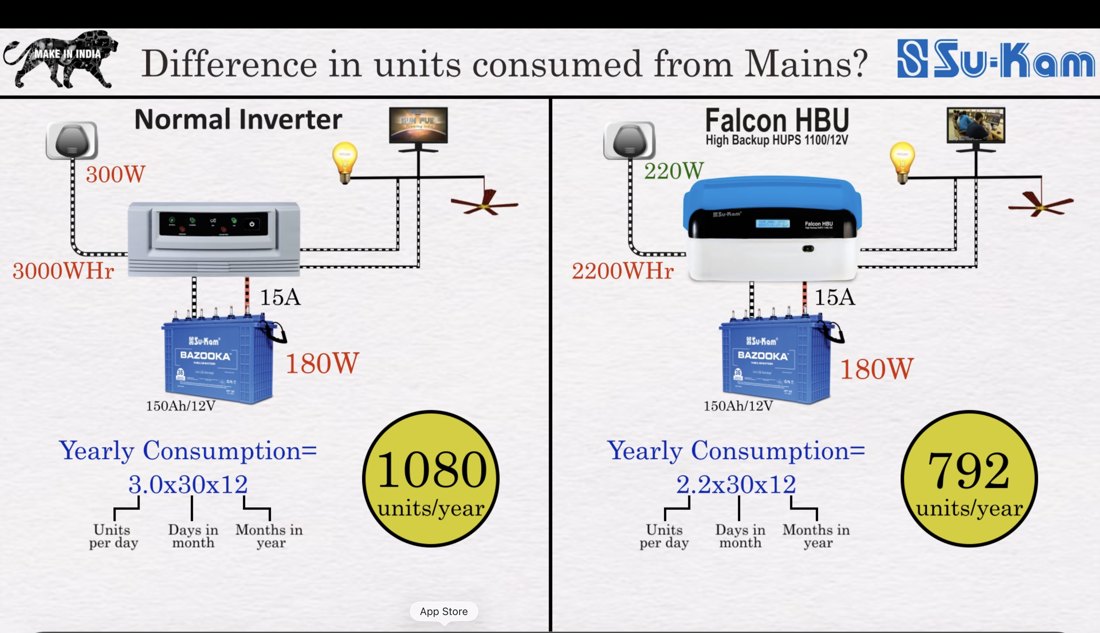
Let me put a number on it — carefully, as an illustration rather than an official figure. The comparison in the video above shows an efficient 4-star inverter saving roughly 250–300 units of electricity per inverter, per year, on charging losses alone. India runs on the order of tens of millions of home inverters and UPS. Put those two facts together:
That is roughly 8 billion units (kWh) a year from the inverter alone — enough to power around 7–8 million average Indian homes, or, at about ₹7 a unit, close to ₹5,000–6,000 crore off the nation’s electricity bills.
But here is the part that worries me most, and the reason I am writing this: BEE has not taken the battery into the picture at all. And the battery is where a huge slice of the loss actually happens. Every unit you put into a lead-acid battery, you get only about 70–85% back; a modern, efficient storage standard would recover most of that. Let me add up just the battery side:
So the battery that BEE has ignored is quietly throwing away another ~3 billion units a year — on top of the inverter. Put the two together and you get the figure that should be on every policymaker’s desk:
Roughly 11 billion units of electricity and on the order of ₹7,000–8,000 crore — every single year — saved simply by standardising what we already know how to build. That is the prize BEE is leaving on the table by rating the inverter (eventually) and ignoring the battery.
These are deliberately conservative, order-of-magnitude estimates — based on the per-unit inverter saving shown in the video, a typical home battery throughput, lead-acid round-trip losses of 70–85%, and an assumed 30-million-unit installed base. The true figure depends on the actual number of inverters and batteries in use, how they are run, and local tariffs. The point is the scale: even on cautious assumptions, the inverter and the battery together run into billions of units and thousands of crores every year.
What I am asking the Bureau of Energy Efficiency to do
- Make star-rating mandatory for home inverters / UPS, not just grid-connected solar inverters.
- Introduce a mandatory efficiency standard for lead-acid (and all) inverter batteries — the part currently ignored.
- Set the efficiency bar high — we hit 90% and a 4-star rating a decade ago; the technology already exists.
- Treat the inverter-plus-battery as one system, the way the consumer actually uses it.
- Use the standard to revive Indian manufacturing and exports, not protect inefficient incumbents.
Ten years ago I put a 4-star inverter on the shelf to show it was possible. The technology is proven, the savings are real, and the national case is overwhelming. All that is missing is the will to make efficiency the rule rather than the exception — for the inverter and the battery. I hope the BEE finds it. — Kunwer Sachdev
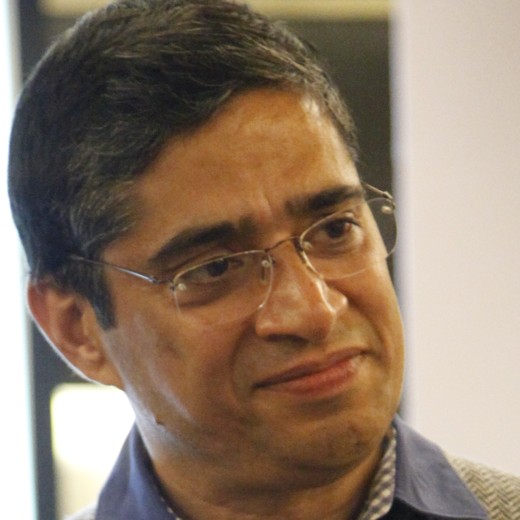
Founder of Su-Kam and Kunwwer.ai, and mentor at Su-vastika and several other companies — the “Inverter Man of India” and the “Solar Man of India.” Read his story →
Disclaimer: It is important to note that while Mr. Kunwer Sachdev founded Su-Kam Power Systems, he is no longer associated with the company as of 2019. Any information regarding his involvement in the company’s operations, strategies, or future plans reflects his tenure prior to that date. Therefore, any discussions or analyses of Su-Kam Power Systems should be considered in the context of his past contributions and not his current association with the company.