Before WiFi Was a Word — How Su-Kam Built India’s First Solar IoT Platform
☀ Solar Technology · Remote Monitoring · R&D in India · 1998–2018
Before WiFi Was a Word: How Su-Kam Built India’s First Solar IoT Platform
When Kunwer Sachdev was designing remote monitoring systems for solar inverters across India in the early 2000s, WiFi was not yet commercially available in the country, Bluetooth had just appeared on its first handset, and smartphones did not exist. He built it anyway — using GSM, RS-232 and Ethernet, and a clarity of solar vision that was a decade ahead of the market.
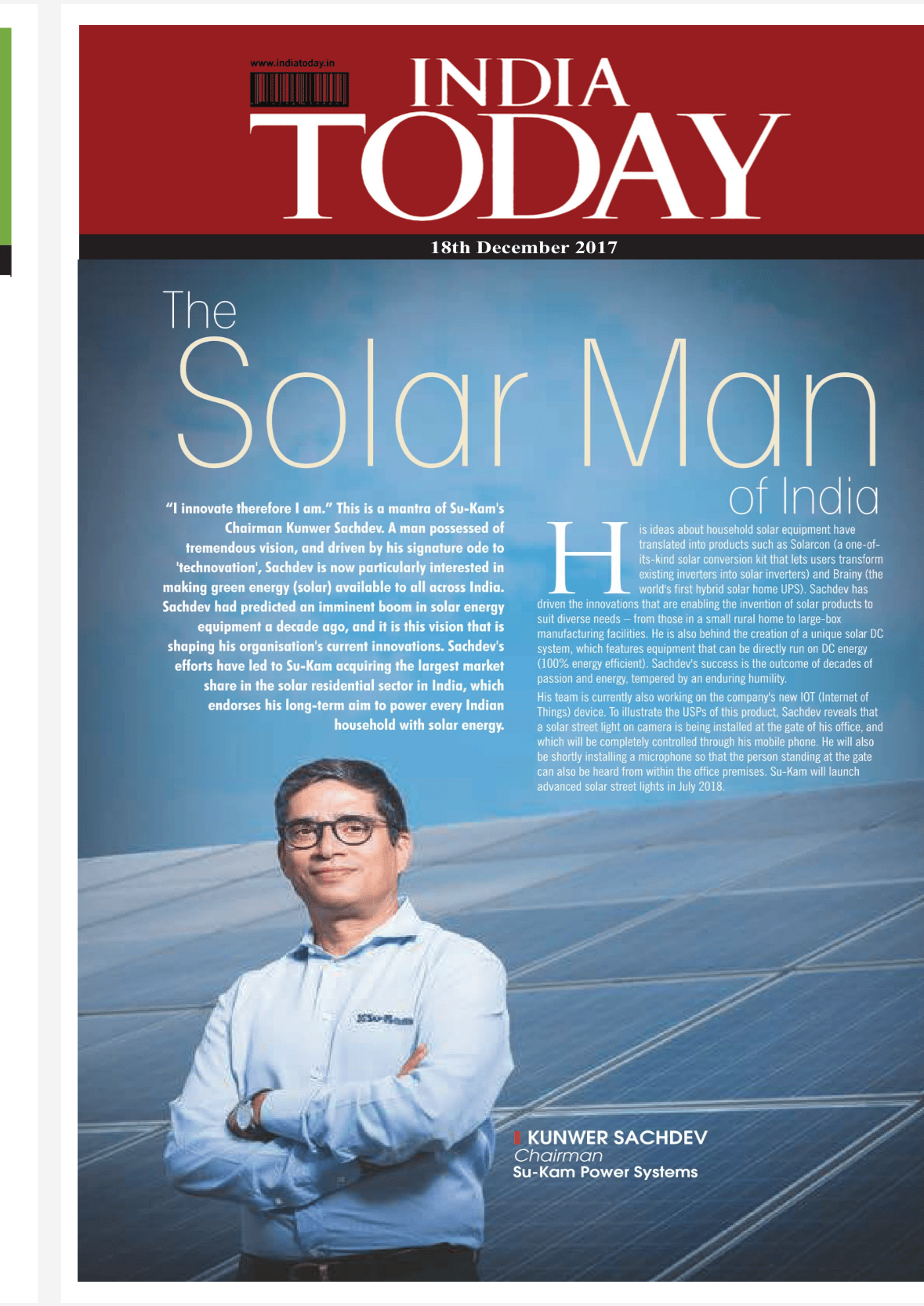
Kunwer SachdevFounder, Su-Kam Power Systems (1998–2018) · Angel Investor · Founder, Kunwwer.ai & Su-vastikaSolar Monitoring2004-2007
iPhone launchedPower NMS v3.00 deployed 20142018 Su-Kam bankruptcy
Let me ask you to hold two facts in your mind at the same time. The first: WiFi as a commercially available technology reached Indian homes and offices at a significant scale only in the mid-2000s, and mass-market smartphones only after 2008. The second: by 2004, Su-Kam was already designing remote monitoring systems for solar inverters — systems that tracked live electrical parameters, sent SMS alerts when something went wrong, logged data every few seconds, and gave operators aanywhere, anytimevisibility over power infrastructure installed across hundreds of sites.
There was no app to show customers. There was no WiFi to connect to. There was no Bluetooth sensor ecosystem. There was RS-232, there was GSM, there was Ethernet, and there was a conviction — mine — that solar power in India was not a future technology. It was an urgent present necessity. And it needed to be managed intelligently, not blindly.
That conviction is what built Power NMS. And the story of Power NMS is the story of how bullish I was — how stubbornly, unfashionably, ahead-of-the-market bullish — about solar technology and R&D in India at a time when very few people around me shared that view.
I was not building for the technology landscape of 2004. I was building for the energy landscape of 2020. The technology caught up. The vision was correct.What the Technology World Looked Like When Su-Kam Was Doing This
Context matters enormously here. When people today look at Power NMS — a browser-based, multi-site, real-time solar monitoring platform — they may think of it as a reasonable piece of engineering. When you place it against what technology was actually available during the years Su-Kam was designing and deploying it, it looks like something else entirely: an act of extraordinary technical ambition and foresight.
Technology ContextWhat Existed — and What Didn’t — When Su-Kam Built ThisTechnologyGlobal Status (Early 2000s)India RealityWiFiStandard published in 1997. First consumer products 1999–2000 (Apple iBook). Niche, expensive, enterprise-only.Effectively Non-Existent — Broadband itself was rare. WiFi routers were luxury imports.BluetoothInvented 1in 994. First phone 2001. Mainstream consumer adoption was only from 2004 to 2006.Not Available — No BT devices in the Indian market at scale until the mid-2000s.SmartphonesiPhone launched 2in 007. Android 2008. “Smart” phones were PDAs for executives.Did Not Exist — Feature phones with basic SMS dominated.Cloud / SaaSAWS lwas aunched 2in 006. “The Cloud” nwas ot mainstream until 2008+.Not Available — Local servers were the only option.GSM / SMSMature and widely deployed globally.Available —India’s mobile network was growing rapidly. Su-Kam used this.RS-232 / EthernetStandard industrial communication protocols, mature.Available ✓ — Available in industrial and office environments. Su-Kam used this.Solar Power IndiaVirtually non-existent commercially. Global solar PV expensive and niche.Nascent — National Solar Mission launched in 2010. Su-Kam was already R&D-ing solar in the early 2000s.Su-Kam’s engineering team built Power NMS using the only tools that actually existed and worked at scale in India: GSM for wireless communication, RS-232 and Ethernet for wired connectivity, and a local server with a web interface accessible from any browser. It was the correct, pragmatic engineering decision — and it produced a platform that worked, was deployed on live commercial sites, and generated real operational data.
The fact that WiFi and Bluetooth were not yet available was not a limitation that stopped the work. It was a constraint that sharpened the engineering. Real innovation does not wait for the perfect toolkit.
Su-Kam’s Solar R&D: A Decade Before the National Solar Mission

India’s National Solar Mission was launched in January 2010 under the Jawaharlal Nehru National Solar Mission (JNNSM) — a policy framework to drive solar deployment at scale. Su-Kam was doing solar R&D, building solar inverters, and deploying solar monitoring software years before this mission existed. When the government finally announced solar as a national priority, Su-Kam already had working products in the field, a monitoring platform generating live data, and an engineering team that had been solving solar integration problems for years.
I believed in solar at a time when the dominant view in the Indian power industry was that solar was too expensive, too unreliable, and too far from grid-scale deployment to be worth serious commercial investment. I disagreed — not as a philosophical position, but as an engineering conviction. The physics of solar electricity generation is unambiguous. The gap between where costs were and where they needed to be was large, but it was a gap that learning curves and manufacturing scale would close. The question was whether Su-Kam would be ready when that happened.
My answer was to invest in R&D before the market validated the decision. To build the monitoring software before customers were asking for it. To train engineers on solar system design and integration before solar installation was a profession in India. This was the bullish bet that defined Su-Kam’s solar chapter.

The Vision Behind Power NMS: What I Was Actually Trying to Build

Power NMS was not just a product. It was a statement of belief about how power infrastructure should be managed — intelligently, continuously, and remotely. The specific technical choices in the platform reflected a set of ideas I had been developing for years about what was wrong with how India managed its power backup systems.
📡
Anywhere Monitoring
A single operator should see all sites simultaneously from any browser, anywhere. Not just from the site. Not just from the office. From anywhere with internet access.
⚡
Proactive Not Reactive
The system should tell you something is wrong before the customer calls to complain. SMS alerts, email notifications, event logs — the platform pushes information out rather than waiting to be queried.
Solar Intelligence
Not just monitoring — computation. How much solar was generated? How does it compare to what was consumed? What is the ROI of this installation? These questions needed answers, automatically.
📊
Data as a Product
MIS reports for billing, energy logs for audits, and historical alarm records for root-cause analysis. The data from monitoring should create operational and commercial value, not just sit in a log file.
🌐
No Software to Install
This was 2004–2014. I insisted that the platform should run in any standard browser with no client installation. A constraint that forced good web architecture — and made the system far easier to deploy at scale.
👷
Field Team Synchronisation
The platform should push updates to field technicians automatically. Not phone calls, not manual status checks — automated SMS updates telling the right person what needs attention at which site.
The Architecture Built With What Actually Existed


The engineering architecture of Power NMS was a direct response to what was actually available and deployable in India at the time. Three communication paths — RS-232 for direct local connection, Ethernet for LAN-connected enterprise sites, and GSM for remote locations with no fixed internet — covered the entire deployment spectrum without requiring technology that did not yet exist.
The Remote Gateway hardware was designed with a philosophy I hold strongly: remove everything that is not necessary for the function. No LCD screen. Simple LED indicators. Flash memory for local data storage when connectivity dropped. All detailed data and interface in the software, not the hardware. This made the gateway cheaper, more reliable, and easier to install in the field conditions of real Indian sites — telecom towers, industrial yards, and remote solar installations.
The Proof: Live Data From a Real Site, January 2014


The screenshots in this presentation are not mockups. They are screen captures from a live, deployed installation on January 17, 2014. Site HO_15kW — a 100 KVA solar off-grid inverter with a 360-volt battery bank — was actively monitored, logging data every few seconds, with cumulative solar generation already at 2,267.21 kWh at the time of capture.
That number — 2,267 kWh — is not a specification. It is real energy, generated by real panels, measured by real software, at a time when most Indian power companies were still treating solar as a pilot project. Su-Kam had moved past pilots entirely and was in full commercial deployment.
We did not wait for solar to become fashionable. We built the systems, tested them on real sites, generated real data, and were ready when the market finally caught up with what we had known for years.What This Tells You About How I Think About Technology
Looking back across the Su-Kam years — from 1998 to 2018 — the thread that runs through every product I championed is the same: conviction about where technology was going, combined with the patience to build for that destination before it became obvious to everyone else.
I was bullish on solar when solar was expensive and unfashionable. I built remote monitoring when WiFi did not exist in India, and smartphones were science fiction. I designed battery testing instruments when competitors were still relying on printed specifications. I filed patents on charging technology that the industry would validate years later. Each of these decisions felt premature at the time. Each of them proved correct.
⚙ On Doing R&D in IndiaWhy I Chose to Innovate in Gurgaon, Not Elsewhere
There was consistent pressure during the Su-Kam years to source technology rather than build it — to license from abroad, to import chipsets, to buy expertise rather than develop it. I resisted this at every turn, not out of nationalism, but out of strategic conviction: technology you develop yourself is technology you own, understand, and can adapt. The technology you license is technology you depend on. Su-Kam’s R&D facility at 196-C, Udyog Vihar, Phase VI, Gurgaon, was not a showpiece — it was where real engineering problems got solved by Indian engineers building genuinely new things. That mattered to me then and it matters to me now. India has always had the intelligence to innovate. What it has sometimes lacked is the institutional will to invest in building before the market has confirmed the answer. I tried to be that kind of institution at Su-Kam.
The honest postscript is that Su-Kam did not survive to harvest everything it had planted. The bankruptcy in 2018 — from which I departed completely and with which I have had no association since — meant that products like Power NMS, innovations like the ATC charging technology of the Falcon+, testing instruments like the Battery-Scopie, and the deep solar expertise accumulated over two decades were left without institutional continuity. That is the wound that does not fully close.
What it does not change is the correctness of the vision. Solar is now India’s largest new power source. Remote monitoring is now standard industry practice. Battery management is a discipline that companies spend hundreds of crores on. R&D is now celebrated as strategic, not extravagant. The Inverter Man & Solar Man of India was not wrong. He was simply early.
⚑ A Personal Note · Su-Kam 1998–2018What I Take Forward From This Chapter
I founded Su-Kam in 1998 and departed in 2018 when the company entered bankruptcy proceedings. I am no longer associated with Su-Kam Power Systems in any capacity. Everything described in this blog — the solar R&D, Power NMS, the Falcon+, the Battery-Scopie — was built during my tenure, under my direction, and reflects the strategic choices I made as founder.
What I carry forward from those twenty years is not bitterness at the ending, but gratitude for the clarity it gave me. At Su-vastika Systems, I continue building advanced lithium-ion battery systems, solar storage, and BESS solutions — the next chapter of exactly the same conviction that drove Su-Kam’s solar work. At Kunwwer.ai, I am applying AI to the problems of founders, investors, and enterprises — a new domain that uses the same muscle: building for where things are going, not just where they are.
The solar bet was correct. The remote monitoring vision was correct. The commitment to R&D in India was correct. I intend to keep being correct — and to do it with better organisational structures around the innovation this time.
Su-Kam Power Systems · Gurgaon · 1998–2018
Twenty years of solar conviction, power electronics R&D, remote monitoring innovation, and product engineering — built in India, by Indian engineers, for a future that the market took a decade to catch up to. Founded and led by Kunwer Sachdev, The Inverter Man & Solar Man of India.
#SolarIndia#IoT
#PowerNMS
#SuKam
#KunwerSachdev
#InverterManOfIndia
#MadeInIndia
#RnDIndia
#SolarTech
#BeforeWiFi
#EarlyInnovator
🔗 Read the Full “My Story” Series
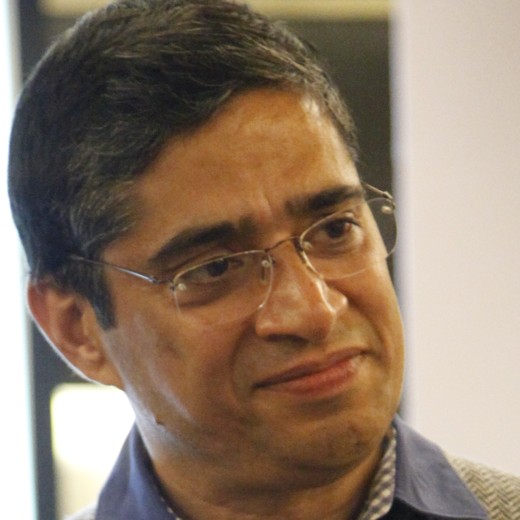
Founder of Su-Kam and Kunwwer.ai, and mentor at Su-vastika and several other companies — the “Inverter Man of India” and the “Solar Man of India.” Read his story →
Disclaimer: It is important to note that while Mr. Kunwer Sachdev founded Su-Kam Power Systems, he is no longer associated with the company as of 2019. Any information regarding his involvement in the company’s operations, strategies, or future plans reflects his tenure prior to that date. Therefore, any discussions or analyses of Su-Kam Power Systems should be considered in the context of his past contributions and not his current association with the company.