The CTO whose career began with me — Sivarajan Ramachandran and India’s first high-frequency inverter
I picked him up from IIT Delhi for his very first job — one of the gifted kids. Together we chased a high-frequency inverter that failed twice (my pet project) until it became a 4-star machine. He left for GE and came home, and I made him my CTO.
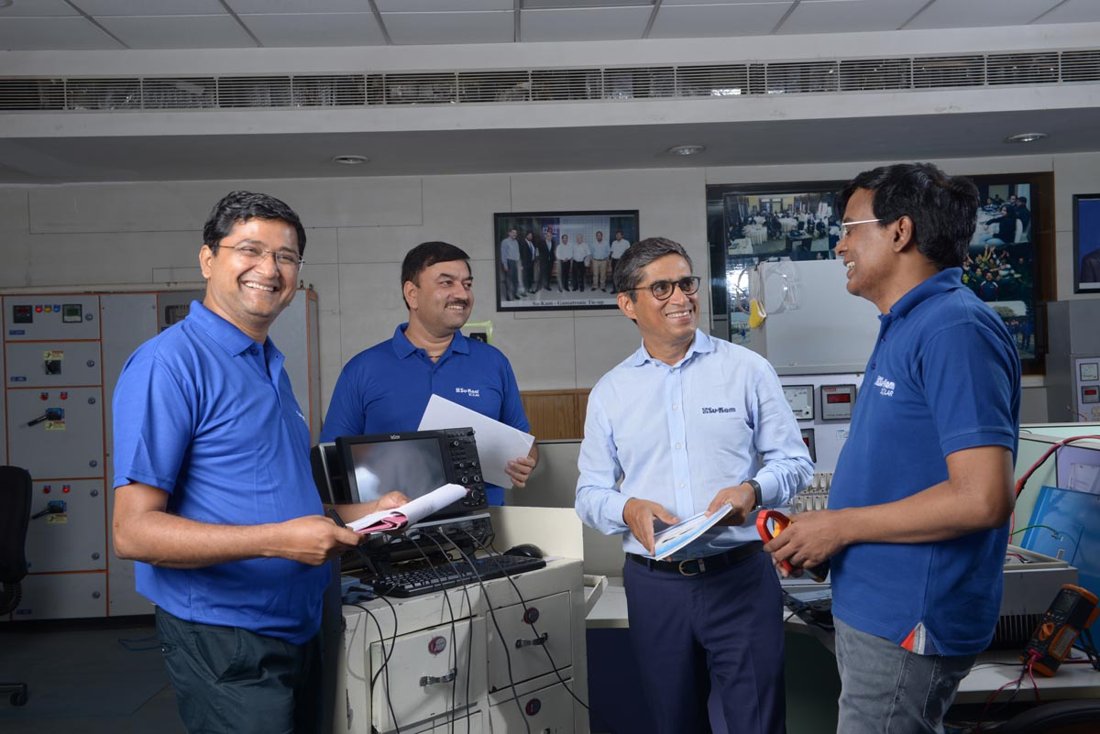
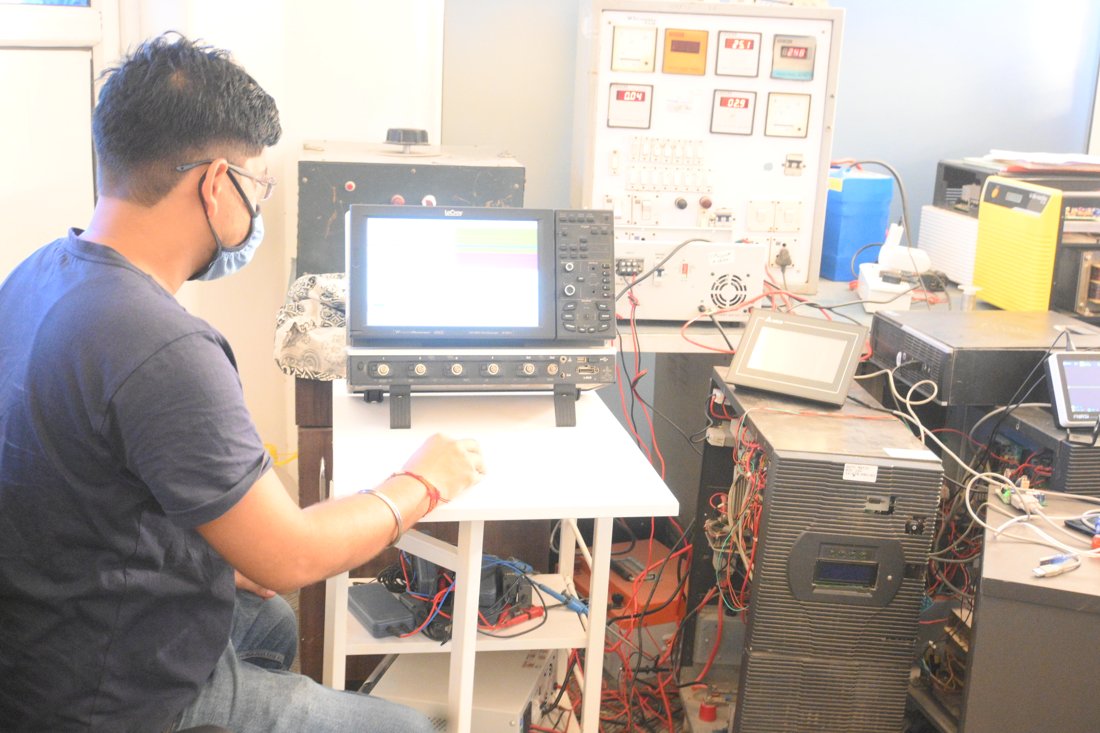
Su-Kam built India’s first high-frequency inverter — and became the first inverter company in India to earn a star rating from the Bureau of Energy Efficiency. This is the story of the engineer who helped lead that work, and whom I trusted enough to make my Chief Technology Officer.
1 I picked him up from IIT Delhi
Sivarajan Ramachandran’s career began with us. I picked him up from IIT Delhi — a young engineer with a master’s in power electronics — and Su-Kam was his very first job. Sivarajan was one of the gifted kids: the kind of mind you quietly build a company around. That is something I have always been proud of — that some of the finest power-electronics minds in this country took their first steps inside our R&D rooms.
He worked with me on one technology after another. He had the rare combination I always looked for — deep technical command, and the calm to keep going when things broke. And in those early years, a lot of things broke.
2 The high-frequency inverter — my pet project that failed twice
Let me be honest about this one, because it matters. At the time, China was the world leader in high-frequency inverter technology — and I wanted to make one for India, built here, with better technology than what was coming from outside. The high-frequency inverter became my pet project. It was hard — far harder than the transformer-based machines the whole industry was comfortable with. The first time we built it in India, it failed. We tried again, and it failed twice. Most people would have shelved it. I kept working on the technology, and so did Sivarajan and the team.
That persistence is the whole point of Su-Kam. We did not stop at a working machine — we pushed it until it became a 4-star High Frequency Inverter, and Su-Kam became the first inverter company in India to earn a star rating from the Bureau of Energy Efficiency (BEE). We even filed a technology patent for the bidirectional inverter technology that came out of this work. A technology China had led, an Indian company now made its own — and a failure I refused to give up on turned into a national first.
Su-Kam’s high-frequency inverter received a 4-star rating from the Bureau of Energy Efficiency in 2015 — the first inverter in India to be star-rated. The story behind it is told in “The Man Who Made Inverters Smarter — Kunwer Sachdev’s 4-Star Revolution.”
3 He left for GE — and came home
Sivarajan’s story rhymes with another one I have told. Just like Vikas Garg, he went outside to a multinational — GE Energy, where he designed transformerless UPS systems for three-phase loads. And just like Vikas, he came back to us. The international companies were always ready to pick up the people we had trained — that was the price of building the best R&D school in the industry. But they could not offer what we had: a place where an engineer’s idea could become a product the country had never seen.
When he returned, he led our R&D engineers across power-electronics hardware and embedded firmware — with Sanjeev Saini as our R&D head — on everything from the high-frequency inverters to the Hybrid GTI solar systems.
4 Why I made him my CTO
I made Sivarajan my Chief Technology Officer — and not for his engineering alone. His presentation skills were excellent. He was soft-spoken, with a superb command of English, and he was simply the best person we had to represent the company. He was active in our marketing too, because when Sivarajan stood up to explain a technology, customers believed it — and they were right to.
That is a rare engineer: one who can invent the thing and tell its story. In a company whose whole identity was innovation, having a technology head who could carry that message to the market was worth as much as the circuits themselves.
5 The machine in the video — Su-Kam Falcon HBU
The video above is the Su-Kam Falcon HBU, the high-frequency inverter put simply: it asks one honest question — how do you save money? A high-frequency design throws away far less energy as heat than an old transformer-based inverter, so it draws less from the grid and is lighter and smaller too. That is what the 4 stars from BEE actually mean on your electricity bill.
High-frequency core
Efficient, lightweight design — the technology I refused to give up on.
4-star efficient
The first inverter in India to be star-rated by BEE.
Built in India
Engineered in-house by the Su-Kam R&D team — better technology, made at home.
People remember Su-Kam for its products. I remember the people who made them, and the failures we walked through together to get there. Sivarajan’s career started in my company and grew into its CTO. That is the kind of story I am proudest of. — Kunwer Sachdev
Founder of Su-Kam and Kunwwer.ai, and mentor at Su-vastika and several other companies — the “Inverter Man of India” and the “Solar Man of India.” Read his story →
Disclaimer: It is important to note that while Mr. Kunwer Sachdev founded Su-Kam Power Systems, he is no longer associated with the company as of 2019. Any information regarding his involvement in the company’s operations, strategies, or future plans reflects his tenure prior to that date. Therefore, any discussions or analyses of Su-Kam Power Systems should be considered in the context of his past contributions and not his current association with the company.