“Who Are You Working For?” — The Question I Opened My KOHLER India Innovation Workshop With
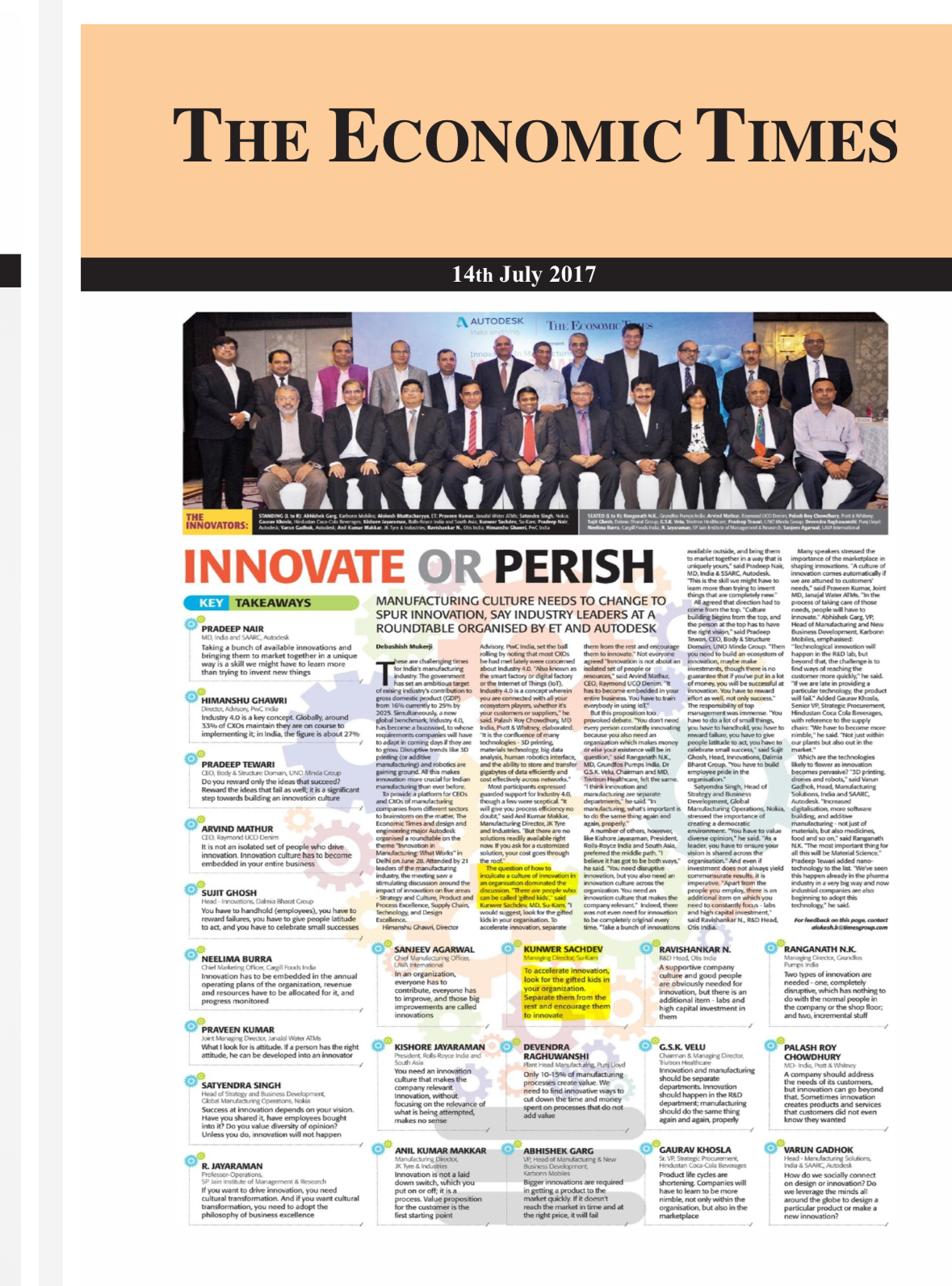
In May 2017, KOHLER India invited me to Lemon Tree Premier in Gurgaon to address a room full of their senior and middle management team. I opened the session with one very simple question. Their answer told me everything I needed to know about what the workshop had to become.
The Question
I walked into the room, exchanged the usual hellos, and then before I said anything else, I asked them one thing:
“Who are you working for?”
The answer came back, more or less in chorus, from all around the room: “For the company.”
And that is exactly the answer I was hoping they would give. Because it is the wrong one.
The Answer I Wanted Them To Arrive At
From there, we spent the next thirty minutes together working towards a different way of looking at their own careers. My argument was simple:
You are not working for the company. You are working for yourself. The company is paying you a salary for the work you deliver today. But at the same time, you are being paid in something far more valuable — the experience you are building through that work. The skills, the exposure, the network, the mistakes you learn from. All of that belongs to you. It walks out of the office with you every evening. It is the only thing that will define your next fifteen years of career.
The salary is what the company pays you today. The experience is what you are quietly paying yourself. And the second one compounds far more powerfully than the first.
“The company pays you a salary. But you are paying yourself in experience. That is the currency that defines your future — not the appraisal letter.”
Why This Talk Was Personal For Me
Here is why this session mattered to me on a personal level. I had spent years watching this exact pattern play out inside my own company.
At Su-Kam, again and again, I would see people who did not want to learn a new skill. People who did not want to change their department. People who did not want to move into a new role, even when the new role was clearly the right one for them, and even when it opened up a bigger future for them. Change was hard. And most of the resistance was not about capability. It was about fear of losing what they already had.
This is not a criticism of my team. This is a cultural reality. Indians in salaried jobs are, by and large, conservative about their careers. The dominant attitude, even among very talented people, is to protect the job first and to grow into the job second. The instinct is to preserve, not to explore. That is a completely rational response to how most Indian families experience economic risk. But it comes at a cost. And that cost is exactly what the KOHLER team, without knowing it, was showing me when they said “we work for the company.”
Why It Was Easier To Say This At KOHLER Than At Su-Kam
Now here is the honest part.
Delivering this message to the KOHLER team was, in a strange way, easier than delivering it to my own Su-Kam team. Because at KOHLER, I was not the beneficiary. I was not asking them to work harder for me. I was not going to gain if they took a bigger role. I was not going to lose if they walked out and started something of their own.
I was free to be completely honest. And that freedom changed the temperature of the room.
Inside your own company, even when you say the exact same words, your team hears them through the filter of “why is he telling us this — what does he want us to do?” That filter is unavoidable. It is the nature of being the boss. The moment the same words come from an outside speaker, the filter disappears. The team hears the message on its own merit.
The Room Opened Up
And they did open up. That workshop, which had begun as a formal “senior and middle management addresses guest speaker” session, quickly became a genuine two-way conversation. People participated openly. They asked me real questions. They talked about their own hesitations. They talked about the parts of their careers they had been quietly avoiding for years because change felt too expensive.
By the time we finished, several of them came up to me afterwards to say that this was the first time somebody had put their own career choices in language they could actually use. I walked out of Lemon Tree Premier that afternoon slightly stunned by how well it had landed. And also — I will admit — slightly amused. I had just motivated somebody else’s team better than I had ever motivated my own.
What I Took Home From That Workshop
The lesson I took home from KOHLER that day was not about KOHLER at all. It was about my own company. It was about the value of bringing in an outside voice into your team — someone who is not the boss, not the parent-figure, not the person who signs the salary cheques — and letting that person say the things that the founder cannot say without sounding self-serving.
Every founder eventually learns this. Some things your team will only hear when the words come from anyone but you. It is not weakness on your part. It is not disloyalty on theirs. It is simply how human beings receive messages. The filter of authority is real. The filter of familiarity is real. And an outside speaker walks in with neither.
That May afternoon in Gurgaon quietly reminded me of that. And it is a reminder every founder needs from time to time.
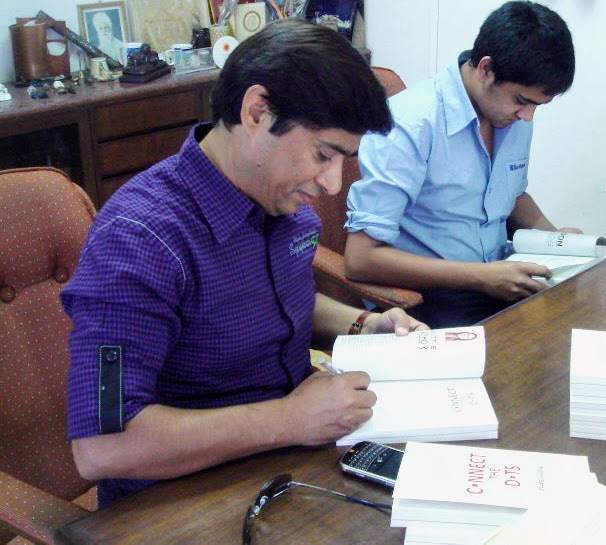
Kunwer Sachdev
Founder, Su-Kam Power Systems · The Inverter Man of India · The Solar Man of India
Startup mentor, angel investor and serial entrepreneur. Built Su-Kam from a Delhi component-supply business into a ₹1,200+ crore power-electronics brand across 70+ countries. Now mentors India’s next generation of founders. Based in Gurgaon, Haryana.

Kunwer Sachdev
Founder, Su-Kam Power Systems (1988–2019) and Kunwwer.ai, mentor at Su-vastika — the “Inverter Man of India” and the “Solar Man of India.” Read his story →